Metal Roofing Products

Interlock® Solid Copper Cedar Shingle Roofing

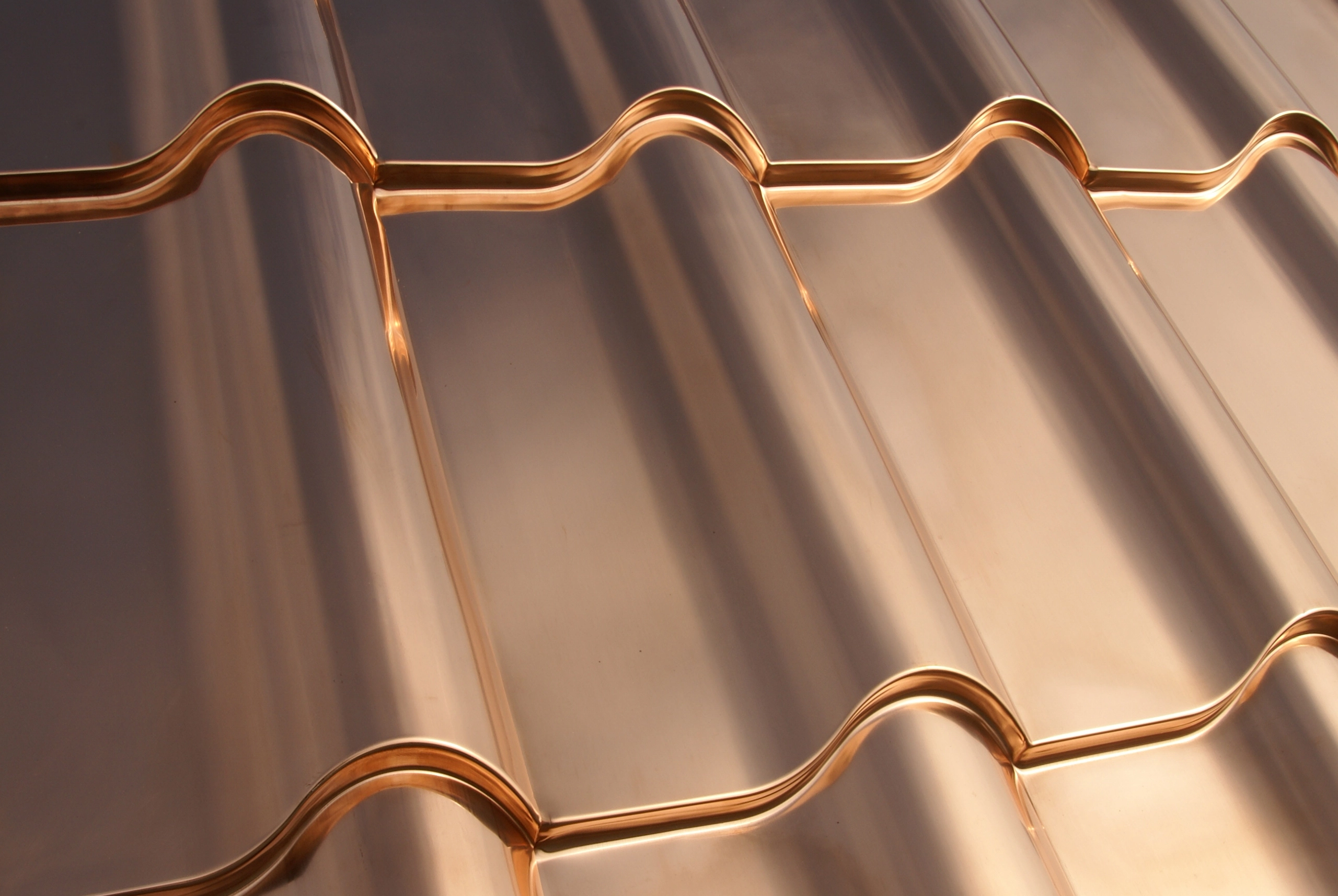
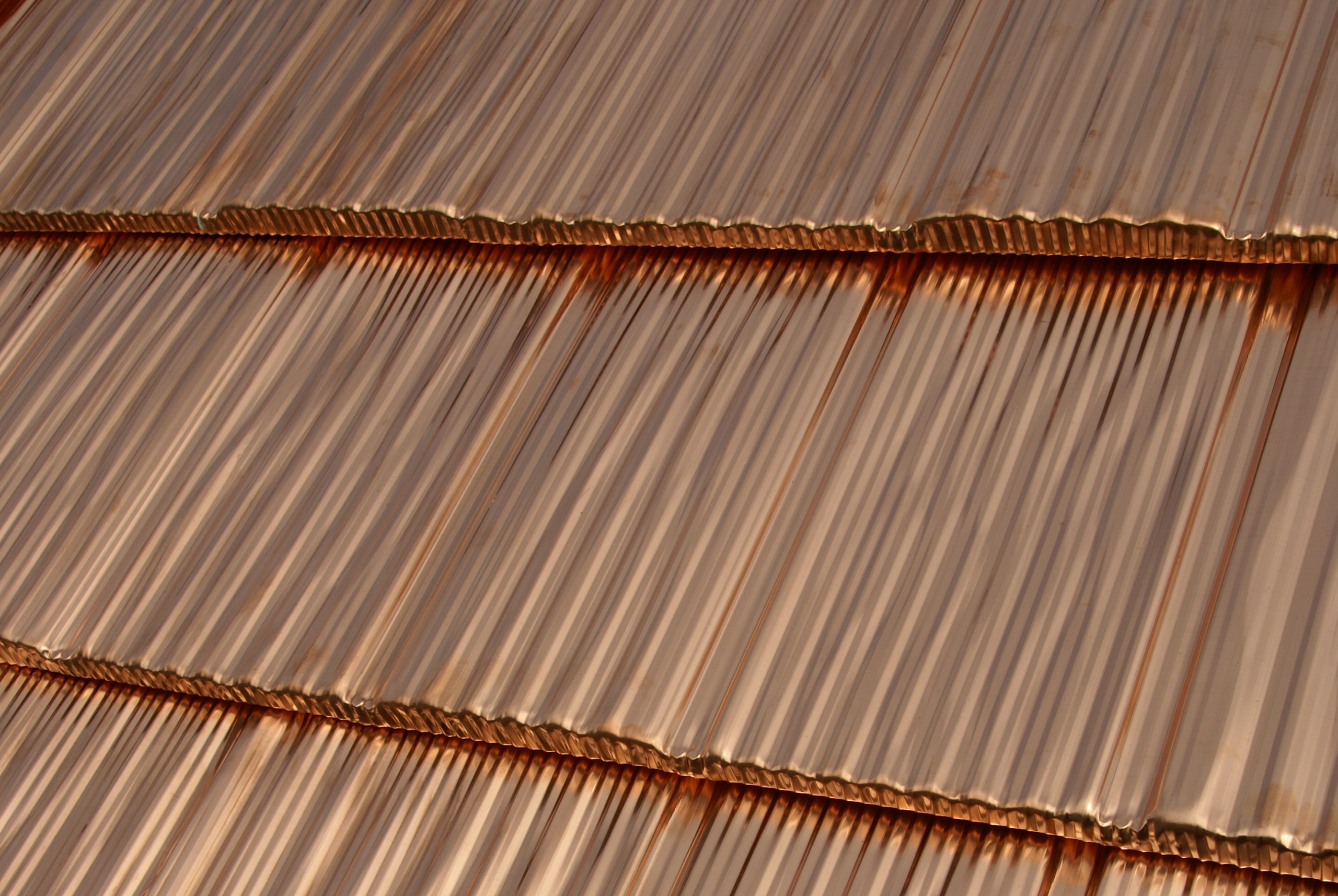
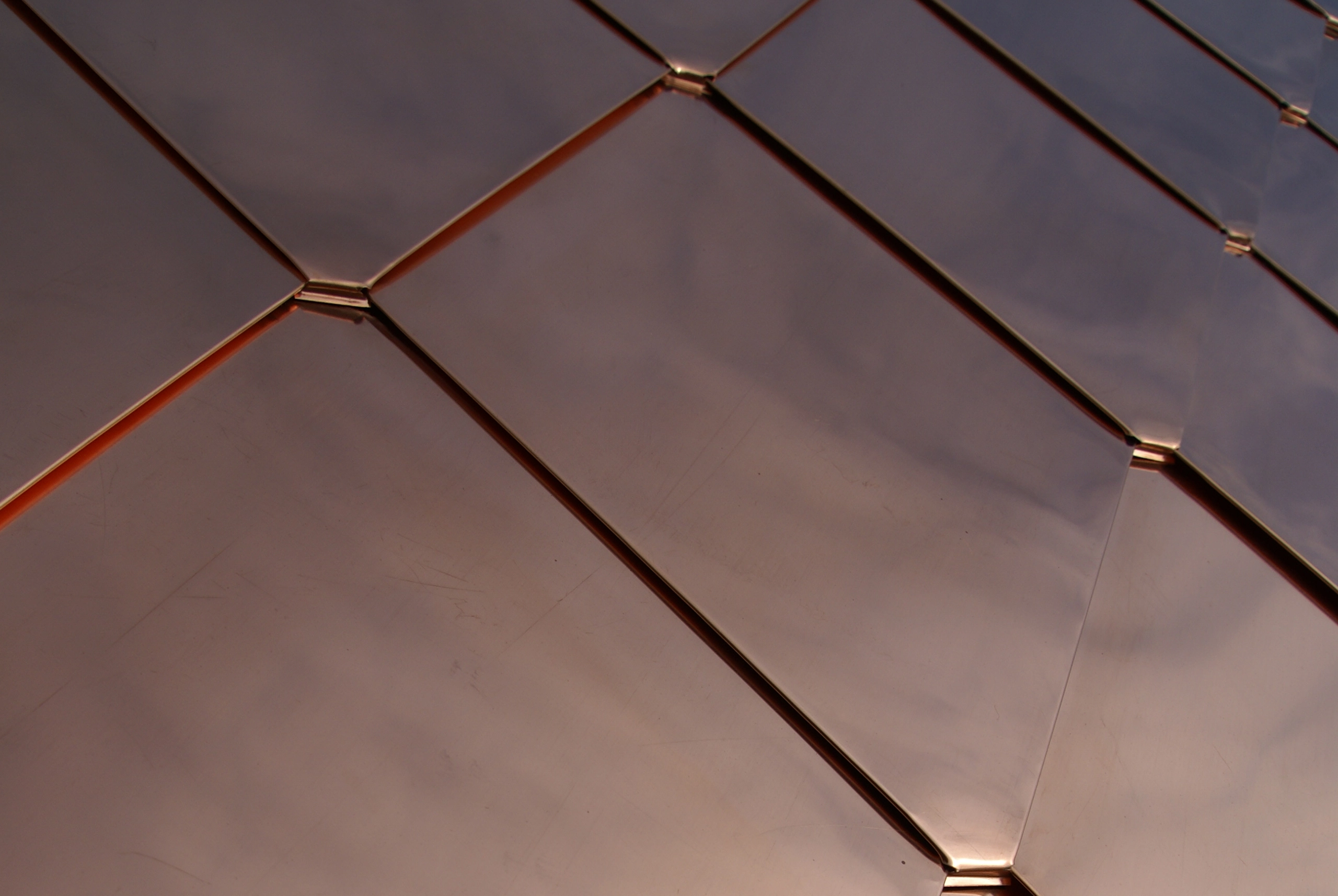
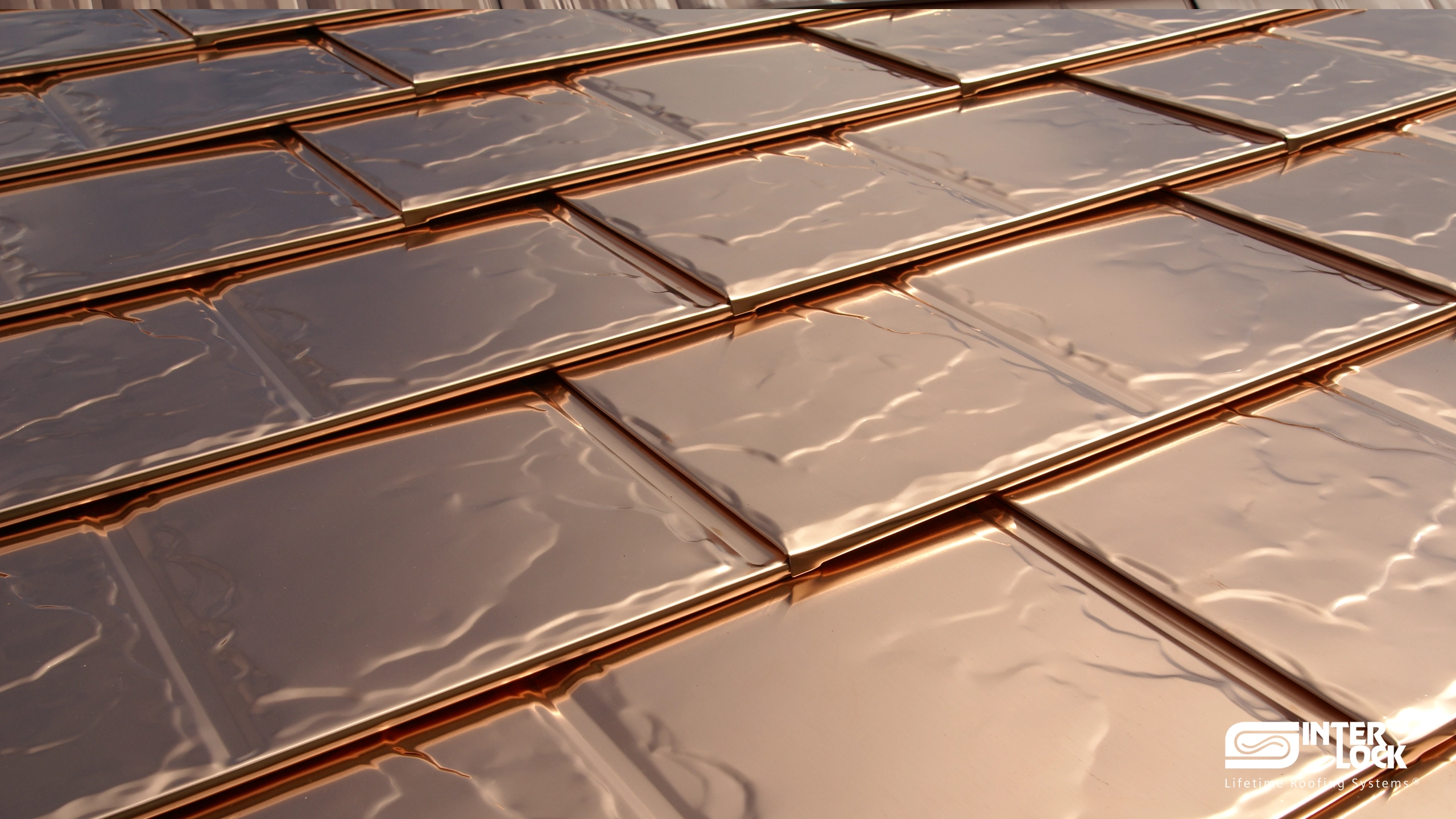
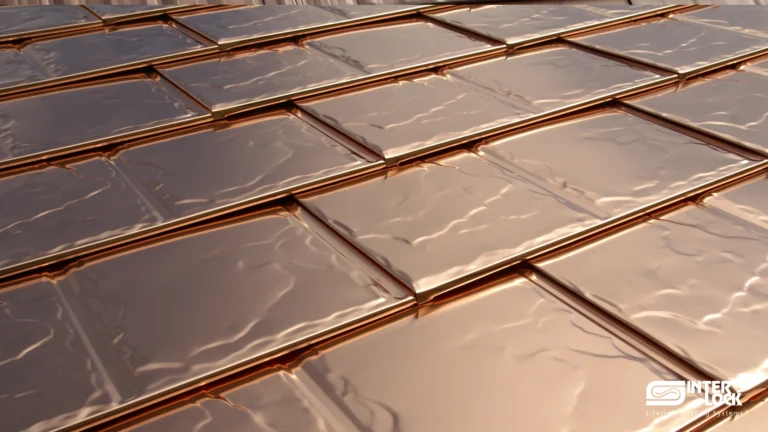
The texture of split cedar shingle in 99.9% pure architectural copper — the warmth of cedar architecture rendered in a material that will not rot, split, burn, or require replacement. Backed by the Interlock® Lifetime Transferable Warranty.

Interlock® Solid Copper Cedar Shingle Roofing reproduces the appearance and texture of split cedar shingles in solid Copper Alloy C11000 (ASTM B370) — the cedar silhouette executed in a material whose service life is measured in centuries rather than decades.
TL;DR Summary
Interlock® Solid Copper Cedar Shingle Roofing reproduces the texture of split cedar shingle in 99.9% pure architectural copper (C11000, ASTM B370). The cedar silhouette executed in a non-combustible material that will not rot, split, mold, or burn — resolving real cedar’s Class C fire vulnerability while preserving the Colonial, Craftsman, and Cape Cod architectural language. 100+ year documented service life, Lifetime Transferable Warranty.
Overview

What Is Interlock® Solid Copper Cedar Shingle Roofing?

Interlock® Solid Copper Cedar Shingle Roofing is the texture and silhouette of split cedar shingle, executed in 99.9% pure electrolytic tough-pitch copper (Copper Alloy C11000) conforming to ASTM B370 — the recognized North American standard for cold-rolled architectural copper sheet. The profile matches Interlock's aluminum Metal Cedar Shingle panel geometry for visual continuity with the Colonial, Craftsman, and traditional New England aesthetic; the substrate is solid copper rather than coated aluminum, with the structural strength to render fine cedar texture without thermal distortion.

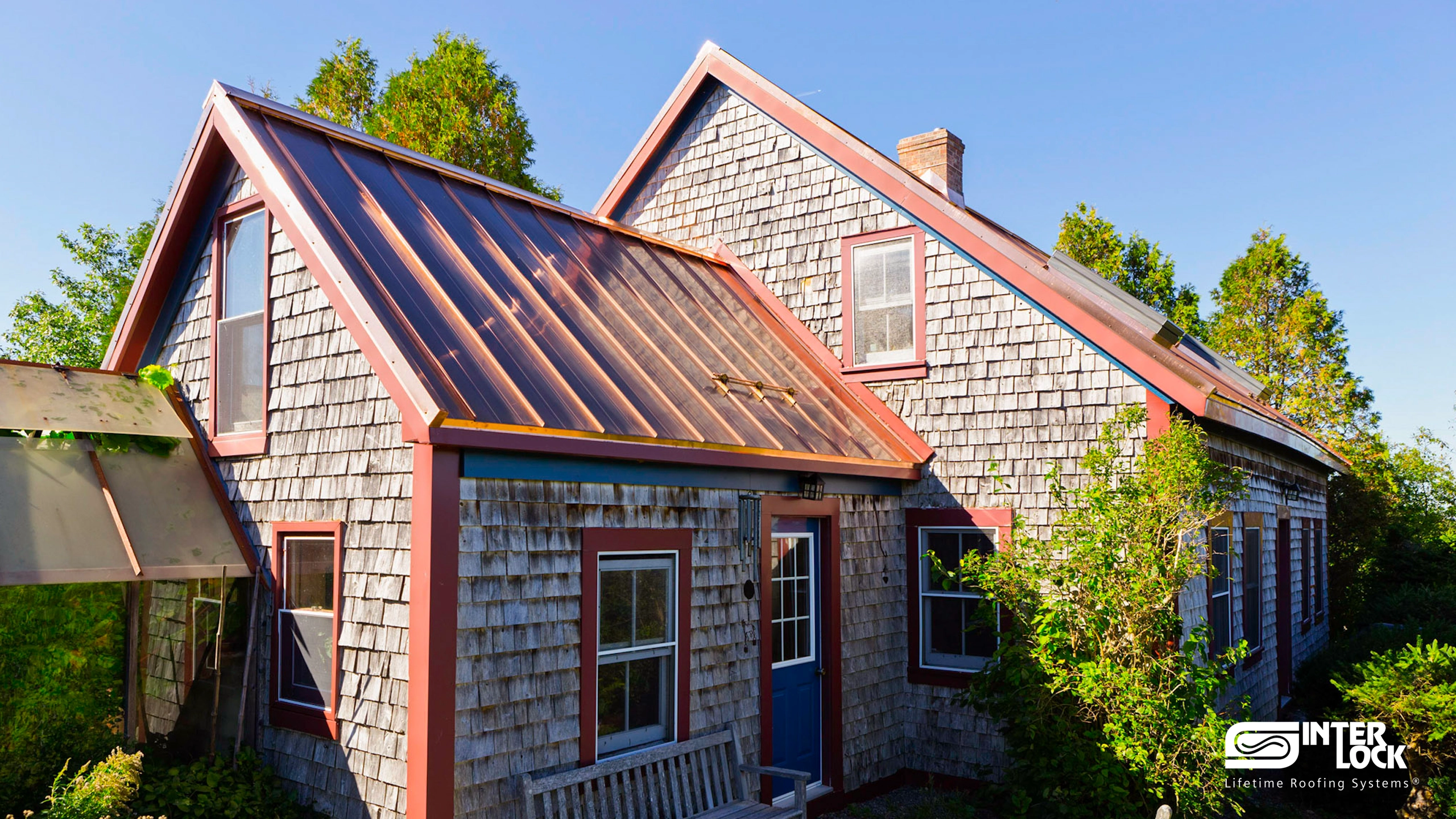
Color is intrinsic to the metal — no PVDF coating, granule layer, or applied finish to fail, fade, or be replaced (unlike the cedar shingles this profile emulates, which are prone to rot, splitting, mold, and ember-ignition within 20–40 years). Newly installed Copper Cedar Shingle panels arrive bright salmon-pink and typically progress through natural oxidation — russet bronze (cuprite, Cu₂O), matte chocolate brown (tenorite, CuO), and ultimately the iconic verdigris green-blue patina, a copper-sulfate/hydroxysulfate layer of brochantite, antlerite, and posnjakite that forms copper's natural weathered surface. Because patina develops with atmospheric exposure, its rate and uniformity vary from roof to roof and are not guaranteed. The same metallurgical process has weathered copper-roofed colonial and ecclesiastical architecture across North America and Europe for centuries.

At approximately 100–125 lbs per square (16 oz or 20 oz architectural copper sheet), structural assessment is recommended for retrofit applications. Solid copper carries an inherent Class A fire rating (copper melts at 1,984°F — well above sustained Class A test temperatures) where real cedar shingle is Class C untreated, UL 2218 Class 4 impact resistance where real cedar splits and cracks under impact, and wind-uplift performance evaluated to ASTM E1592 — specified under CSI MasterFormat 07 41 13 and conforming to IBC §1507.4 and IRC §R905.10. Solar-array compatible, 100% recyclable at end of service, and backed by the Interlock® Lifetime Transferable Warranty.

Table of Contents

Who It's For

Interlock® Solid Copper Cedar Shingle for Heritage, Architects, and Specifiers

You love the warmth and rhythm of split cedar shingle architecture — the Colonial, Craftsman, and Cape Cod tradition — but you want a roof that will outlast the home rather than rot, split, mold, or burn within a generation. Interlock® Solid Copper Cedar Shingle gives you the appearance of split cedar in a substrate that develops a living patina rather than degrading toward replacement. The cedar look that will be on your home in 2100. Backed by the Interlock® Lifetime Transferable Warranty applied to a material whose documented service life is multi-century.

Interlock® Solid Copper Cedar Shingle is specified under CSI MasterFormat 07 41 13 (Metal Roof Panels). The substrate is Copper Alloy C11000 cold-rolled to architectural sheet per ASTM B370, supplied in 16 oz (~0.0216") or 20 oz (~0.027") nominal weight. Panel geometry matches Interlock Metal Cedar Shingle profile on the four-way interlocking concealed-fastener system, with stainless steel fasteners specified throughout to prevent galvanic corrosion. Performance: UL 790 Class A fire (inherent / non-combustible per ASTM E136 — a defining advantage over real cedar's Class C untreated rating), UL 2218 Class 4 impact, ASTM E1592 wind-uplift, IBC §1507.4 / IRC §R905.10 conformance. Sustainability: 100% recyclable, no fluoropolymers, contributes to LEED Materials & Resources credits. Full panel profile drawings, fastener schedules, and CSI-formatted submittal language available on request.

Interlock® Solid Copper Cedar Shingle installs using the four-way interlocking concealed-fastener system common to the Interlock® aluminum and copper lines, with stainless steel fasteners throughout to prevent galvanic corrosion. Copper requires careful detailing for runoff management (copper-laden water will stain unsealed masonry and concrete if drainage is unmanaged) and incompatible-metal contact must be avoided. Certified Interlock installers receive copper-specific training and technical support. Contact your regional Interlock representative to discuss copper dealer opportunities.

KEY ADVANTAGES

The Interlock® Solid Copper Cedar Shingle Advantage

Multi-Century Service Life

Copper roofing carries the only roofing service record measured in centuries rather than decades — documented across colonial, ecclesiastical, and civic architecture in North America and Europe. The cedar shingle profile you select today will be on the home for generations rather than replaced in 20–40 years.

Class A Inherent Fire Resistance

Copper is inherently non-combustible (ASTM E136; melting point 1,984°F) — the strongest fire performance specification available, and a defining safety advantage over real cedar shingle’s Class C untreated fire rating. The cedar look without the cedar fire risk.

Naturally Evolving Patina Finish

Color is intrinsic to copper — no paint, granule, or organic finish to fail. The roof typically evolves through natural oxidation: salmon-pink to russet bronze, then chocolate-brown CuO, and ultimately verdigris green-blue (brochantite, antlerite, posnjakite). Patina is copper’s natural weathered surface; its rate and uniformity vary with environmental and atmospheric conditions and are not guaranteed.

UL 2218 Class 4 Impact / 120 mph Wind

Solid Copper Cedar Shingle carries the highest UL 2218 hail-impact classification (Class 4) and is warranted to 120 mph wind — backed by the inherent strength of solid copper sheet and Interlock’s four-way interlocking concealed-fastener system. Real cedar shingles split, crack, and lift under the same impact and wind exposures.

100% Recyclable Architectural Material

Architectural copper is among the most circular materials in the built environment — 100% recyclable at end of service without performance loss, contributing to LEED Materials & Resources credits and applicable Environmental Product Declarations. No fluoropolymers, no plasticizers, no organic binders.

Lifetime Transferable Warranty

Backed by the Interlock® Lifetime Transferable Warranty — applied to a material whose verifiable service life, documented across centuries of colonial, civic, and heritage residential applications, makes solid copper the most defensible long-term roofing investment.
INDUSTRY EXPERT TESTIMONIAL

Why a 48-Year Metal Roofing Coatings Veteran Endorses Interlock®

Robert Scichili · President, Robert Scichili Associates, Inc.
· 21 years Desoto · 10 years Morton International · 6 years BASF · 10 years 3M

In my 48 years of experience in the metal roofing industry (21 years with Desoto, 10 years with Morton International, 6 years with BASF and 10 years with 3M), it is most unique to find a company who is constantly striving to provide roofing products that live up to claims that are being made to customers. From the very moment the Interlock Roofing System is applied to a home the customer experiences excellent installation and a very unique surface design all applied to the finest metal available. All these are provided with the promise of great durability and sustainability and a low maintenance roofing system. The use of Alunar(r) Coating Systems, which have a superior record of color fastness, chalk resistance and literal fusion like adhesion is the finest coating system anyone can provide.

Robert Scichili

Robert Scichili Associates, Inc.

Independent testimonial from an industry expert. Robert Scichili is President of Robert Scichili Associates, Inc. (Richardson, TX) and Principal Partner at RSK Avanti Partners LLC — a strategic marketing, sales, and technical development consultancy for the metal construction and architectural coatings industries. He previously served as Business Development Manager for the Industrial Coatings Division at BASF Corporation, where he led market positioning for the Ultra-Cool reflective coatings line. Robert is a founding Board Member of the Cool Metal Roofing Coalition and a published authority on Energy Star, LEED, and cool metal roofing technologies. His 48-year career in industrial coatings spans Desoto, Morton International, BASF, and 3M.
Technical Data

Product Specifications

Specification Details
Base Material & Alloy Specification Copper Alloy C11000 (electrolytic tough-pitch copper, 99.9% pure) cold-rolled to architectural sheet per ASTM B370
Panel Gauge & Nominal Weight 16 oz/ft² (~0.0216" / 0.549 mm) or 20 oz/ft² (~0.027" / 0.686 mm) — expressed by weight designation per industry standard
Installed Weight Per Square ~100 lbs per 100 sq ft (16 oz copper) or ~125 lbs per 100 sq ft (20 oz copper) — structural assessment recommended for retrofit applications
Hail Impact Resistance Rating Class 4 — UL 2218 (highest classification issued)
Fire Resistance Rating Class A (inherent / non-combustible per ASTM E136; copper melting point 1,984°F)
Wind Speed Resistance — Manufacturer Warranted 120 mph (193 kph) warranted; wind-uplift evaluated to ASTM E1592
Surface Finish System None applied. Copper naturally tarnishes and develops a multi-stage atmospheric patina (cuprite Cu₂O → tenorite CuO → verdigris [brochantite, antlerite, posnjakite]); the rate and uniformity of patina formation vary with environmental and atmospheric conditions and are not guaranteed
Panel Size, Weather Exposure & Coverage Geometry Matches Interlock® Metal Cedar Shingle panel geometry for design continuity with the aluminum line. Contact your local Interlock dealer for current cedar shingle profile dimensions and exposure details
Material Warranty Program Name Interlock Lifetime Transferable Warranty (Guardian Lifetime Limited Non-Prorated Material Warranty)
Warranty Duration, Ownership Terms & Transferability Lifetime for original registered owner; transferable (one-time) — applied to a material with documented multi-century service life
Recycled Content & End-of-Life Recyclability 100% recyclable at end of service. Architectural copper is routinely fabricated with substantial recycled content per Copper Development Association data
Building Code Conformance & Sustainability Credits Conforms to IBC §1507.4 and IRC §R905.10 (metal roof panels). Contributes to LEED Materials & Resources credits; Environmental Product Declarations available
CSI MasterFormat Division & Section Reference 07 41 13 — Metal Roof Panels
Available Colors

Patina Evolution — The Living Finish

Interlock® Solid Copper Cedar Shingle is offered as a single architectural specification rather than a color palette — because copper is not a finish applied to a substrate; it *is* the substrate. Every panel is roll-formed from 99.9% pure electrolytic tough-pitch copper (Copper Alloy C11000, ASTM B370). Color is intrinsic to the metal: there is no paint film, PVDF resin, stone granule, or organic binder to chalk, fade, peel, delaminate, or fail by UV exposure. What replaces a fixed color is a documented oxidation sequence — the same self-passivating chemistry that has preserved the cladding of the Statue of Liberty (1886), the U.S. Capitol Dome (1863), Christ Church Philadelphia (1727), and copper-roofed colonial and ecclesiastical architecture across North America and Europe in continuous service for more than three centuries. New Interlock® Solid Copper Cedar Shingle arrives bright salmon-pink and progresses through measurable stages: russet bronze within weeks as cuprite (Cu₂O) forms; matte chocolate-brown tenorite (CuO) across one to three years; and ultimately the iconic verdigris green-blue — a stable copper-sulfate/hydroxysulfate stratum of brochantite (Cu₄SO₄(OH)₆), antlerite (Cu₃SO₄(OH)₄), and posnjakite (Cu₄SO₄(OH)₆·H₂O) that becomes the roof’s own mineral protective barrier. Patina is not deterioration — it is the engineered service life of the material expressing itself. Because copper is a single specification, not a palette, Interlock provides physical material samples rather than printed swatch cards. Contact your local Interlock dealer to request a solid-copper sample and the full architectural specification sheet.
Material Comparison

Solid Copper Cedar Shingle vs. Real Cedar Shingles vs. Asphalt Shingles

How does Interlock® Solid Copper Cedar Shingle compare to real cedar shingles and the alternatives a homeowner typically considers for Colonial, Craftsman, and traditional residential architecture? The numbers tell a clear story about service life, fire safety, rot resistance, and lifetime financial logic.
Specification Interlock® Solid Copper Cedar Shingle Real Cedar Shingles Asphalt Shingles
Lifespan 100-200+ years (documented) 20-40 years (rot, split, mold) 15-25 years
Weight ~100-125 lbs/square (16 oz / 20 oz) 150-200 lbs/square 250-350 lbs/square
Fire Rating Class A (inherent / non-combustible) Class C (untreated) Class A (with mat)
Warranty Lifetime Transferable Limited or none 20-30 year limited
Maintenance Essentially maintenance-free (patina self-passivates) Regular treatment (rot, moss, splitting) Periodic inspection, re-nailing
Environmental Performance

Sustainability & Energy Efficiency

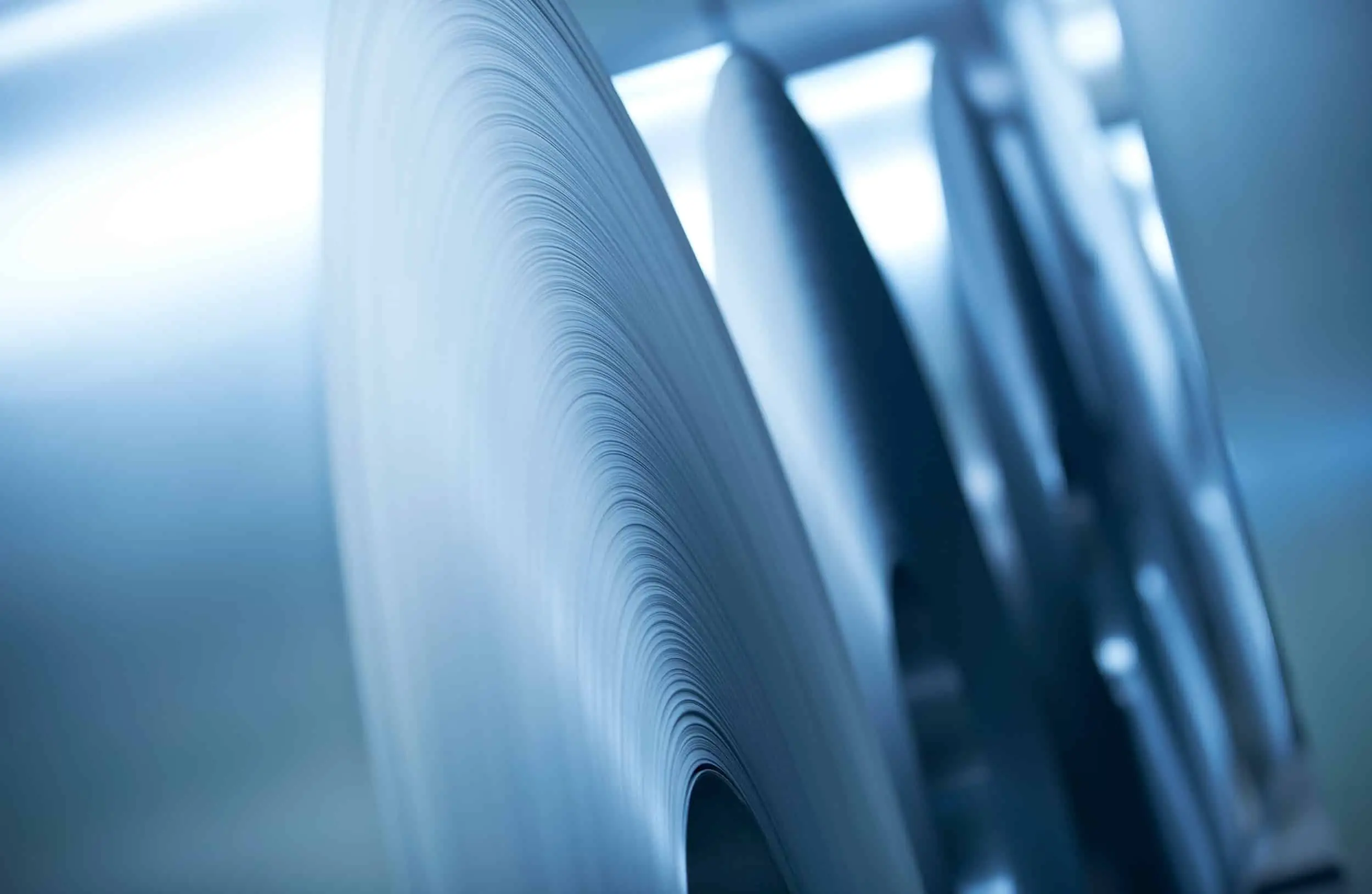
Interlock Copper Roofing is the most sustainable premium roofing material available — a 100% natural, 100% recyclable solid copper product with no synthetic coatings, no chemical treatments, and no landfill contribution at end of life. Copper’s multi-century service life produces the lowest embodied carbon per year of use of any roofing material on the market. Interlock Copper is certified as a Green Roofing Product, requires zero maintenance throughout its lifespan, and retains full material recovery value when eventually recycled. For architects, developers, and homeowners committed to genuine long-term environmental performance, Interlock Copper Roofing is the definitive sustainable roofing specification.
Aluminum Coils
Interlock Copper may contribute to LEED v4 credits under Materials & Resources (MR) — Recycled Content, and Energy & Atmosphere — Enhanced Energy Performance. Contact your Interlock dealer for LEED documentation support.
Verified Customer Reviews

What Homeowners Say About Interlock Metal Roofing

FAQ

Frequently Asked Questions About Solid Copper Cedar Shingle Roofing

What is Interlock® Solid Copper Cedar Shingle Roofing?

Interlock® Solid Copper Cedar Shingle Roofing is the texture and silhouette of split cedar shingle executed in 99.9% pure electrolytic tough-pitch copper (Copper Alloy C11000) conforming to ASTM B370. Panel geometry matches the aluminum Metal Cedar Shingle profile on the four-way interlocking concealed-fastener system. The substrate is solid copper, not coated aluminum or copper-plated steel. Service life is measured in centuries rather than the 20–40 years of real cedar, and every panel is backed by the Interlock® Lifetime Transferable Warranty.
Yes. The panel is roll-formed to reproduce the split-face texture, edge geometry, and shadow lines of split cedar shingle at a scale designed to read authentically from typical viewing distances (street level, neighboring property, drive-up approach). Where the difference becomes visible is on close inspection — cedar has natural grain figure that copper does not, and copper develops its patina rather than weathering to silver-grey. Most homeowners, neighbors, and review boards rate the architectural read as authentic to cedar; the inspection-distance differences become an advantage as copper develops its distinctive patina over time.
Real cedar shingle is Class C untreated under ASTM E108 fire testing — a defining liability in wildfire-zone counties across California, Colorado, Texas Hill Country, the Carolinas, and increasingly the Pacific Northwest. Solid copper is inherently non-combustible per ASTM E136 (melting point 1,984°F), achieving Class A by virtue of the material itself rather than an underlayment-dependent assembly. Many California wildfire-zone counties no longer permit new untreated cedar installations; solid copper cedar shingle is the architectural-equivalent specification that meets code.
Yes — copper is historically associated with the same architectural lineage as cedar shingle. Colonial-era civic, ecclesiastical, and high-end residential buildings frequently used copper roofing alongside cedar siding, and the verdigris patina is closely associated with traditional New England and Mid-Atlantic architectural vocabulary. Homes that read as Colonial, Craftsman, Cape Cod, Saltbox, or Foursquare style accept copper cedar shingle without aesthetic compromise; the only practical difference is that copper develops the patina (rather than weathering to silver-grey) over decades.
Real cedar shingle lasts 20–40 years before requiring replacement due to rot, splitting, moss/mold colonization, and (in fire-zone climates) ember-ignition vulnerability. Solid copper cedar shingle is documented at 100–200+ years of continuous service. Over a 50-year ownership window, a real cedar roof requires one to two full replacement cycles plus ongoing treatment; a solid copper installation is installed once and never replaced — it develops a patina that is the material’s protective system, not a degradation toward replacement.
No. Real cedar shingle requires periodic oiling, fungicide treatment, moss removal, and individual shingle replacement to manage rot and splitting over its service life — a recurring maintenance budget item. Solid copper has no equivalent maintenance requirements: the patina is copper’s natural weathered surface, not a coating that requires renewal. Annual debris removal from valleys and gutters is the only routine attention required. Copper cedar shingle is essentially maintenance-free across its multi-century service life.
Yes — verdigris is historically associated with Colonial-era civic architecture across New England and the Mid-Atlantic, and patinated copper is widely considered architecturally appropriate for Colonial, Federal, Georgian, and Cape Cod styles. Heritage preservation authorities and historic-district review boards routinely approve copper roofing on period-appropriate Colonial homes. For projects requiring a specific patina stage at completion (matched to existing adjacent copper, or specified at design review), Interlock-certified installers can apply professional patina-accelerant solutions.
Generally no — existing cedar shingles deteriorate underneath and create an unstable substrate for the underlayment and fastening system. Best practice is full tear-off and deck assessment before solid copper installation. The light installed weight of copper cedar shingle (~100–125 lbs/sq) means structural reinforcement is rarely required after tear-off, even when transitioning from cedar to copper. Your local Interlock dealer will perform a deck and structural assessment as part of the project specification.
Copper cedar shingle is the lower-cost option over a 50-year ownership window once recurring cedar costs are factored in. Real cedar shingle requires periodic chemical treatment (every 3–7 years), individual shingle replacement as splits develop, full re-roofing every 20–40 years, and — in fire-zone retrofits — mandatory replacement with non-combustible material at point of sale in some jurisdictions. Solid copper is installed once. The 50-year total cost of ownership reliably favors copper across published comparisons by the Copper Development Association and independent roofing-industry analyses.
Yes. Solid copper is inherently non-combustible per ASTM E136 (melting point 1,984°F), achieving Class A fire classification under ASTM E108 / UL 790. This satisfies wildfire-zone roofing requirements under the International Wildland-Urban Interface Code (IWUIC) and California Chapter 7A, where untreated cedar shingle is increasingly prohibited or restricted. Specify under CSI MasterFormat 07 41 13 and reference the Interlock® copper material specification (C11000, ASTM B370) on submittal documents.
AT A GLANCE

Key Takeaways

• Cedar shingle architectural language in solid copper — no rot, no splitting, no mold, no Class C fire risk.
• Copper Alloy C11000 per ASTM B370; supplied in 16 oz or 20 oz architectural sheet.
• Installed weight ~100–125 lbs/sq vs real cedar’s 150–200 lbs/sq waterlogged weight.
• Inherent Class A fire per ASTM E136 — meets California Chapter 7A and International Wildland-Urban Interface Code (IWUIC) requirements where untreated cedar is prohibited.
• Documented service life 100–200+ years vs real cedar’s 20–40 years (rot, split, mold, ember-ignition).
• UL 2218 Class 4 hail; ASTM E1592 wind-uplift; 120 mph warranted; concealed-fastener four-way interlocking installation.
• Patina evolution (salmon-pink → bronze → verdigris) is architecturally compatible with Colonial / Federal / Georgian / Cape Cod styles.

Sample ID Heading 1 Heading 2
100+ YEAR documented service life INHERENT Class A fire (vs cedar Class C) C11000 / ASTM B370 architectural copper IWUIC + CA Chapter 7A compliant
Profiles

Explore Other Interlock Roofing Profiles
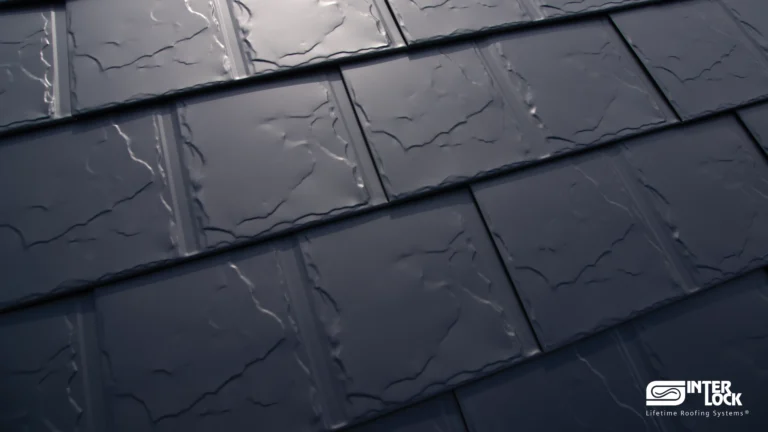
Interlock® Metal Slate Roofing

Interlock® Metal Slate Roofing is a lifetime aluminum system that captures the dimensional beauty of natural slate — ideal for Colonial and Victorian homes — without the weight, cracking, or reinforcement costs of stone. Rust-proof, Alunar®-coated for energy savings, and backed by a transferable Lifetime Limited Warranty.
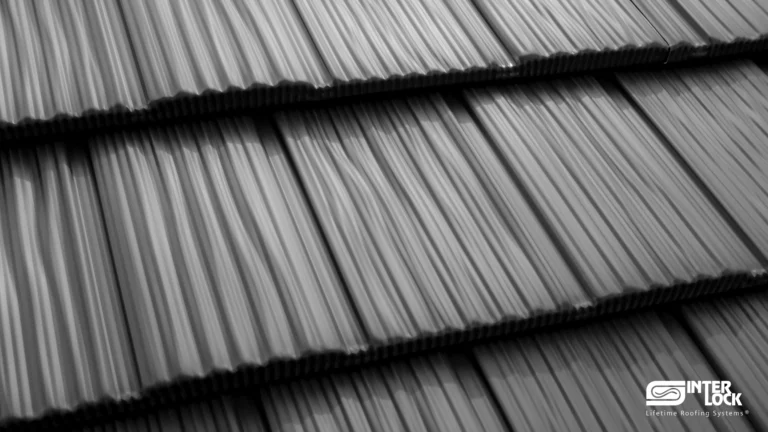
Interlock® Metal Shake Roofing

Interlock® Metal Shake Roofing recreates the deep, hand-split texture of rustic cedar shake in rust-proof aluminum — rugged character for Cape Cod and Craftsman homes without the warping, rot, or fire risk of wood. Alunar®-coated and backed by a transferable Lifetime Limited Warranty.
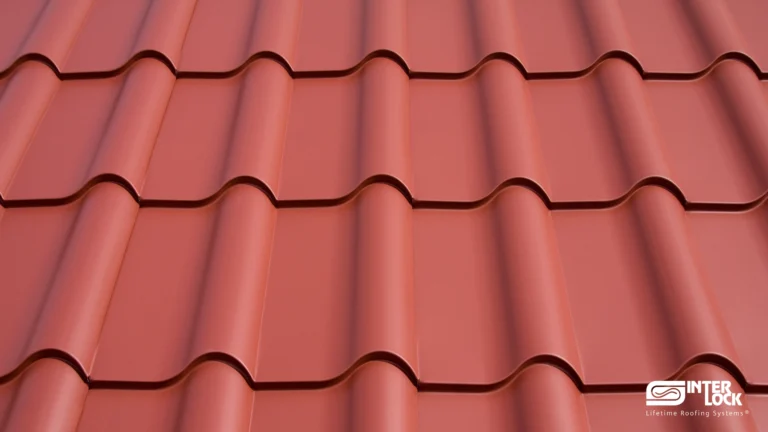
Interlock® Metal Tile Roofing

Interlock® Metal Tile Roofing brings the elegance of Mediterranean clay tile to homes that can't bear — or pay to reinforce for — real tile's weight. Lightweight, rust-proof aluminum that resists cracking, hail, and fire; Alunar®-coated and backed by a transferable Lifetime Limited Warranty.
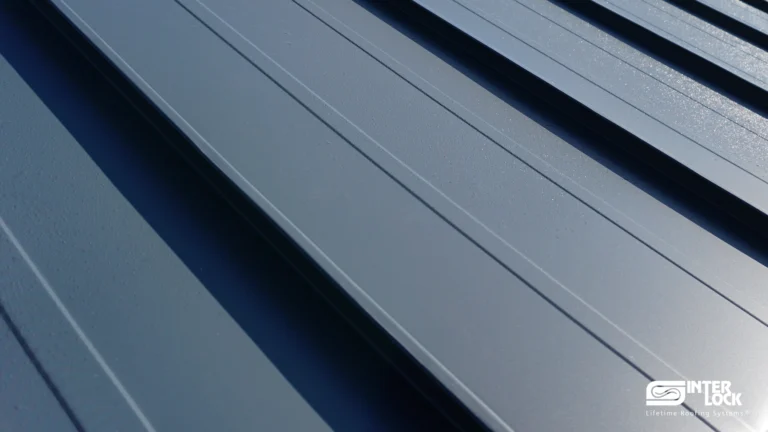
Interlock® Metal Standing Seam Roofing,.

Interlock® Metal Standing Seam Roofing is a mechanical-lock aluminum panel system with clean vertical lines — the signature look of modern and farmhouse architecture. Concealed fasteners, exceptional wind resistance, rust-proof, solar-compatible, and backed by a transferable Lifetime Limited Warranty.
Interlock® Copper Roofing

Interlock® Copper Roofing is the solid-copper tier of Interlock's system, available in all five profiles in 12, 16, and 20 oz copper. A living material, it weathers from bright metallic through bronze to a distinctive verdigris patina — copper's timeless prestige for luxury and heritage homes, backed by a transferable Lifetime Limited Warranty.

NEXT STEPS

Free, No-Obligation Interlock® Consultation

Every Interlock® consultation is free and carries no obligation — for homeowners, architects, and roofing contractors alike. Contact Interlock and a certified local sales representative from your exclusive Interlock® dealer will reach out to schedule a Zoom call, office meeting, or in-home consultation. The conversation walks through profile selection, technical installation requirements (slope, venting, underlayment, fasteners, trim, snow management, solar), and project-specific pricing — in that order, never the reverse.

For homeowners →

Review profile options, color samples, and the Guardian Lifetime Transferable Warranty applied to your specific home.

For architects →

Walk through CSI MasterFormat 07 31 16 / 07 41 13 specifications, ICC-ES ESR-1790 documentation, and assembly options for your project submittal.

For roofing contractors →

Discuss certified-installer territory, training, technical support, and warranty registration through the Interlock® dealer network.
ABOUT THE AUTHOR
Scott Plumptree is Media Manager at Interlock Roofing, part of The Interlock Group — North America’s pioneer in lifetime aluminum roofing systems. With 30+ years in integrated marketing and digital strategy, Scott leads the team responsible for helping homeowners research, compare, and confidently choose a permanent metal roof. He oversees Interlock’s editorial, SEO, and AI search visibility, ensuring every page answers real homeowner questions about durability, warranties, and long-term value.

Scott Plumptree

Media Manager

Email: scott@interlockgroup.com — Please contact me directly if you have any questions :)
Last modified: May 26, 2026 9:58 am
Share to...