
What Is Roof Aging? Definition, Measurement, and Roofing Impact
TL;DR Aging Summary
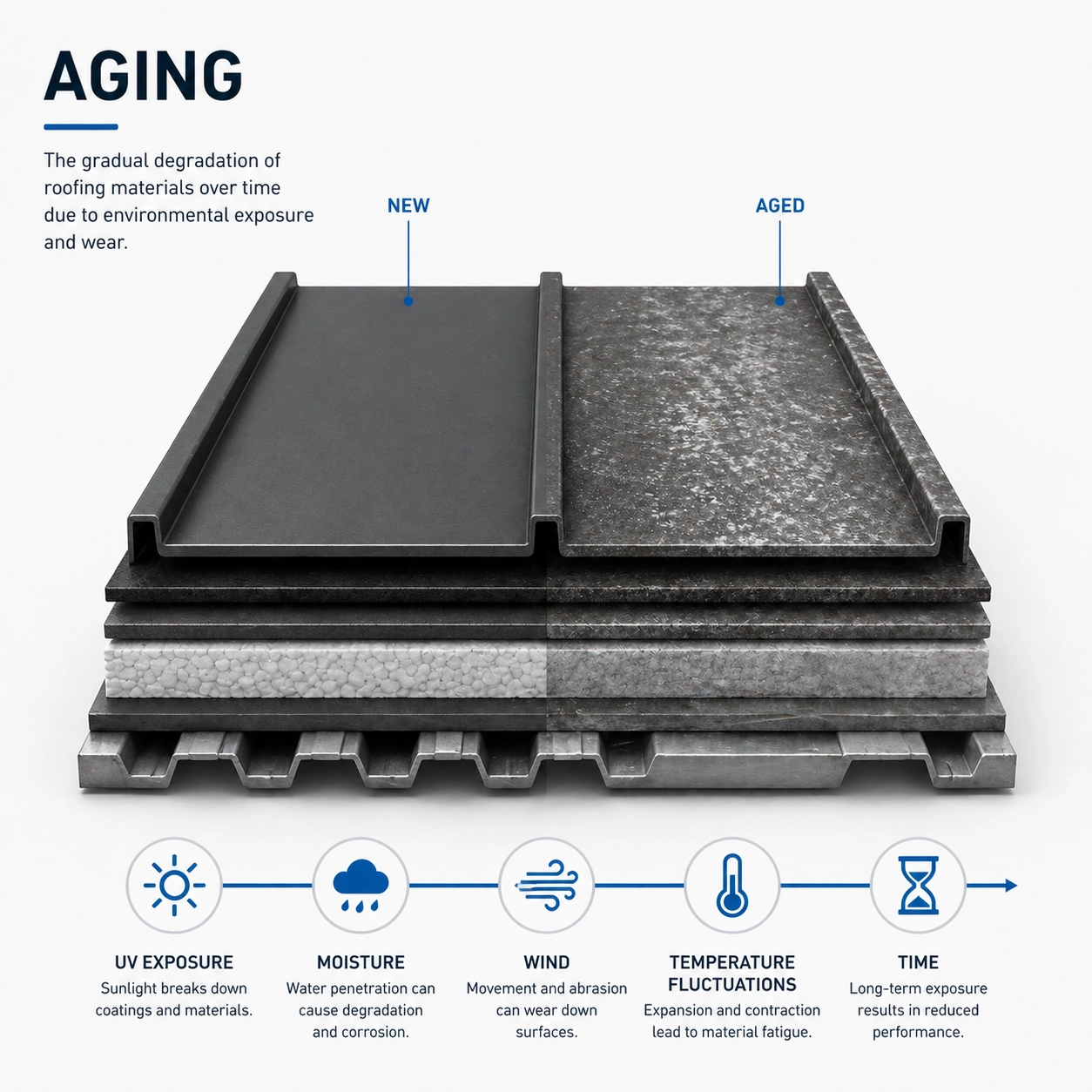
Aging is the gradual decline in a roofing system’s performance properties due to exposure to weather, UV radiation, and environmental stressors over time. As aging progresses, materials can lose flexibility, strength, and water resistance, increasing the risk of leaks or premature failure. Understanding aging helps inform maintenance schedules, warranty expectations, and replacement decisions to manage long-term roof performance and costs.
How Roof Aging Influences Material Durability, Performance, and Replacement Decisions
Aging in roofing refers to the gradual process by which roofing materials deteriorate or change in physical and chemical properties over time due to exposure to environmental factors. This process affects all components of a roof system, including shingles, membranes, underlayment, flashing, and sealants. Aging is influenced by variables such as ultraviolet (UV) radiation, temperature fluctuations, moisture, freeze-thaw cycles, and airborne pollutants, which collectively impact the roof’s structural integrity and performance.
As roofing materials age, their ability to shed water, resist wind uplift, and maintain proper drainage along slopes, ridges, and eaves can diminish. Common signs of aging include loss of granules on asphalt shingles, cracking or curling at the roof pitch, brittleness, and reduced flexibility in membranes. These changes can compromise the roof’s ability to prevent leaks, manage snow shedding, and withstand wind loads, ultimately affecting the building’s overall envelope. Understanding the aging process is critical for maintenance planning, roof inspections, and determining the remaining service life of a roofing system.
How Roof Aging Is Measured in Roofing Materials
Roof aging is measured through a combination of laboratory testing, field exposure studies, and on-site inspections to assess changes in roofing materials over time. Laboratory methods often simulate accelerated aging by exposing samples to cycles of UV radiation, moisture, and temperature extremes, allowing professionals to evaluate how materials degrade under controlled conditions. In the field, roof aging is evaluated by monitoring real-world installations for physical changes such as color fading, surface cracking, granule loss, and flexibility reduction—key roof aging signs that indicate material performance is declining.
Professionals also compare roof aging versus roof weathering, distinguishing between natural material deterioration and damage from specific environmental events. The impact of roof aging on performance is assessed by examining how well the roof continues to resist water intrusion, maintain structural integrity, and provide thermal protection as it ages. Measuring roof aging in different climates is critical, as factors like UV intensity, precipitation, and temperature fluctuations can accelerate or slow the aging process, directly affecting material lifespan. Roofing experts use these evaluation methods to classify the stage of aging, predict remaining service life, and recommend maintenance or replacement strategies to ensure long-term roof performance.
Overview & Key Considerations
What Is Aging
Why Aging Matters
Benefits of Aging
LONG-TERM DURABILITY INSIGHT
Understanding aging characteristics enables accurate prediction of a roofing system’s service life and replacement timing.
PERFORMANCE DEGRADATION TRACKING
Monitoring aging reveals how weathering, UV exposure, and thermal cycling impact roof membrane integrity over time.
ENERGY EFFICIENCY IMPACT
Aging analysis identifies changes in reflectivity and insulation performance that affect building energy consumption as roofs mature.
MOISTURE INTRUSION RISK
Evaluating aging helps assess increased vulnerability to moisture ingress due to material embrittlement or loss of waterproofing properties.
Limitations of Aging
ENVIRONMENTAL VARIABILITY
Aging rates differ significantly based on local climate, UV exposure, and pollutant levels, complicating performance predictions.
MEASUREMENT CHALLENGES
Quantifying aging effects is limited by the lack of standardized metrics for cumulative material degradation over time.
INCOMPLETE PERFORMANCE INDICATOR
Aging does not uniformly reflect all failure modes, such as sudden impact damage or hidden moisture intrusion.
MATERIAL-SPECIFIC RESPONSES
Different roofing materials exhibit unique aging mechanisms, making cross-material comparisons unreliable for performance assessment.
Common Aging Problems
PERFORMANCE DECLINE OVER TIME
Aging leads to reduced waterproofing performance, increasing the risk of leaks and moisture intrusion as materials deteriorate.
MISMEASUREMENT OF SERVICE LIFE
Incorrectly assessing aging rates results in premature failure predictions or unexpected breakdowns, compromising maintenance planning.
ENVIRONMENTAL VARIABILITY IMPACT
Aging rates vary significantly with local climate, causing unpredictable degradation and inconsistent performance across similar roof assemblies.
LOSS OF CRITICAL PROPERTIES
Aging can cause loss of flexibility, adhesion, or reflectivity, directly impacting energy efficiency and structural integrity over time.
Aging Quick Facts
Use Cases for Aging
LONG-TERM DURABILITY RATINGS
Aging is critical when comparing roofing materials’ projected service life for warranty selection and lifecycle cost analysis.
CODE COMPLIANCE ASSESSMENT
Aging performance is evaluated to ensure roofing assemblies meet minimum durability standards required by building codes.
PRODUCT TESTING BENCHMARKS
Manufacturers use aging data to validate how materials withstand UV, moisture, and temperature cycles over time.
ENERGY EFFICIENCY MONITORING
Aging impacts reflectivity and insulation values, affecting long-term energy performance calculations for sustainable roofing systems.