
What Is Roof Batten? Function and Role in Roofing Systems
TL;DR Batten Summary
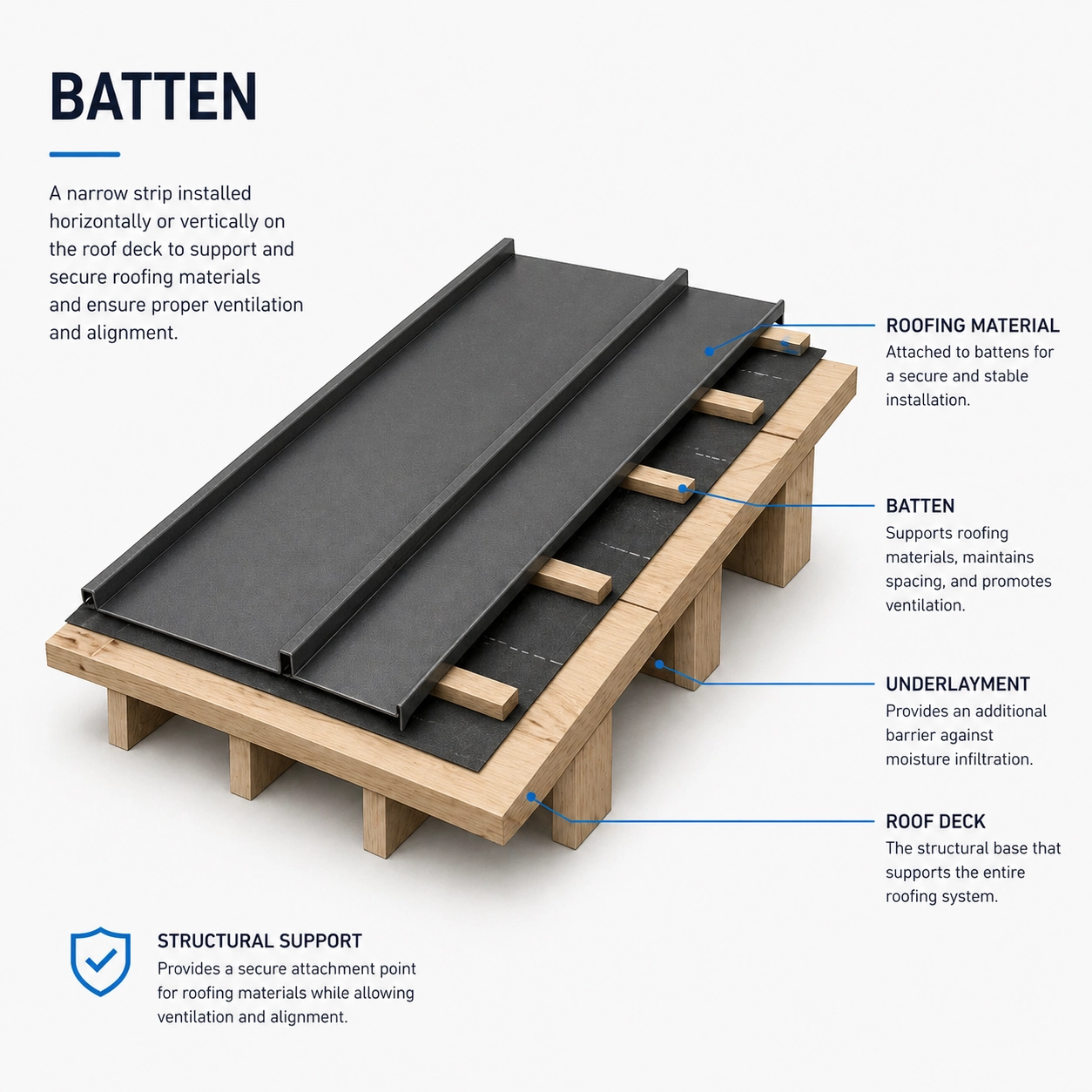
A batten is a thin, linear strip of wood or metal installed horizontally or vertically on a roof to provide a secure attachment point for roofing materials such as tiles, slates, or metal panels. By creating a stable mounting surface, battens help ensure proper alignment, spacing, and drainage, reducing the risk of leaks or material displacement. Improper batten installation can compromise roof performance, leading to water intrusion, wind damage, or premature material failure.
How Roof Battens Enhance Tile Roof Performance, Durability, and Weather Protection
Batten is a linear, typically rectangular strip of wood, metal, or plastic installed horizontally or vertically across roof slopes to provide a secure fixing point for roofing materials such as tiles, slates, or metal panels. In pitched roof assemblies, battens are fastened perpendicular to rafters or trusses, creating a grid that supports the roof covering and establishes consistent spacing and alignment from eaves to ridge. The geometry and spacing of battens are determined by the type of roofing material, roof pitch, and local building codes, ensuring structural integrity and optimal load distribution.
Functionally, battens elevate roofing materials above the roof deck, promoting efficient water drainage and ventilation beneath the covering, which helps prevent moisture buildup and extends the lifespan of the roof system. In regions with heavy snow or high winds, properly installed battens enhance wind resistance and facilitate snow shedding by providing a stable anchoring system and reducing uplift forces. Battens are essential in both traditional and modern roofing systems, including tile, slate, and standing seam metal roofs, and are especially critical on complex roof geometries with varying slopes and intersecting ridges.
How Roof Battens Are Evaluated in Roofing Systems
Roof battens are evaluated within roofing systems based on their placement, function, integration with other components, and ability to support the intended roofing material. Roofing professionals assess roof batten spacing requirements to ensure proper load distribution and secure attachment of tiles or other coverings, which is critical for both structural integrity and weather resistance. The roof batten installation process is scrutinized for correct alignment, fastening, and compatibility with underlayment and counter battens, especially in systems where both are used.
The function of a roof batten in roofing systems is also evaluated in terms of water management and ventilation, as improper installation can lead to moisture accumulation or inadequate airflow beneath the roof covering. In high wind areas, roof batten problems such as uplift or detachment are closely examined, with attention to fastening methods and material durability. Roofing professionals also consider the benefits of roof battens for tile roofs, such as enhanced drainage and secure anchoring, while being vigilant for potential failure causes like rot, corrosion, or improper spacing. Ultimately, the evaluation of roof battens is integral to ensuring the long-term performance and reliability of the entire roofing assembly.
Overview & Key Considerations
What Is Batten
Why Batten Matters
Benefits of Batten
STRUCTURAL SUPPORT
Battens provide a secure framework for attaching roofing materials, ensuring proper load distribution and structural stability.
VENTILATION ENHANCEMENT
Battens create an air gap beneath roofing materials, promoting airflow and reducing moisture buildup within the roof assembly.
WATER SHEDDING
Battens help maintain consistent spacing and alignment of roofing elements, improving water drainage and minimizing the risk of leaks.
SYSTEM INTEGRATION
Battens facilitate the integration of underlayment, insulation, and roof coverings, supporting overall roofing system performance and longevity.
Limitations of Batten
MOISTURE TRAP RISK
Improperly installed battens can trap moisture against the roof deck, leading to accelerated wood rot or corrosion.
FASTENER DEPENDENCY
Batten performance is highly dependent on correct fastener selection and placement, increasing risk of uplift or slippage if misapplied.
COMPATIBILITY LIMITATIONS
Battens must be compatible with both roofing material and underlayment, restricting their use with certain assemblies or membrane types.
LOAD TRANSFER WEAKNESS
Battens can create localized load points, potentially causing deformation or failure under concentrated snow, wind, or foot traffic.
Common Batten Problems
LOOSE BATTEN FASTENING
Inadequately secured battens can shift or detach, compromising tile alignment and increasing risk of wind-driven water intrusion.
BATTEN ROT AND DECAY
Prolonged moisture exposure leads to batten rot, undermining structural support for roofing materials and causing localized sagging.
CORROSION AT METAL FIXINGS
Metal fasteners used to secure battens may corrode over time, resulting in weakened connections and potential batten failure.
INCOMPATIBLE BATTEN SPACING
Incorrect batten spacing disrupts load distribution, causing uneven support and premature failure of overlying roof coverings.
Batten Quick Facts
Use Cases for Batten
TILE FASTENING SUPPORT
Battens provide a secure base for mechanically attaching clay or concrete roof tiles, ensuring proper alignment and wind resistance.
METAL ROOF PANEL SPACING
Battens are used to create an even substrate for attaching standing seam or metal roof panels, improving drainage and panel stability.
VENTILATION CHANNEL CREATION
Battens elevate roof coverings above the deck, forming ventilation channels that help reduce heat buildup and moisture accumulation.
SLATE ROOF LOAD DISTRIBUTION
Battens distribute the weight of natural slate tiles across rafters, minimizing point loads and reducing the risk of deck damage.