
What Is Roof Absorption? Definition, Measurement, and Roofing Impact
TL;DR Absorption Summary
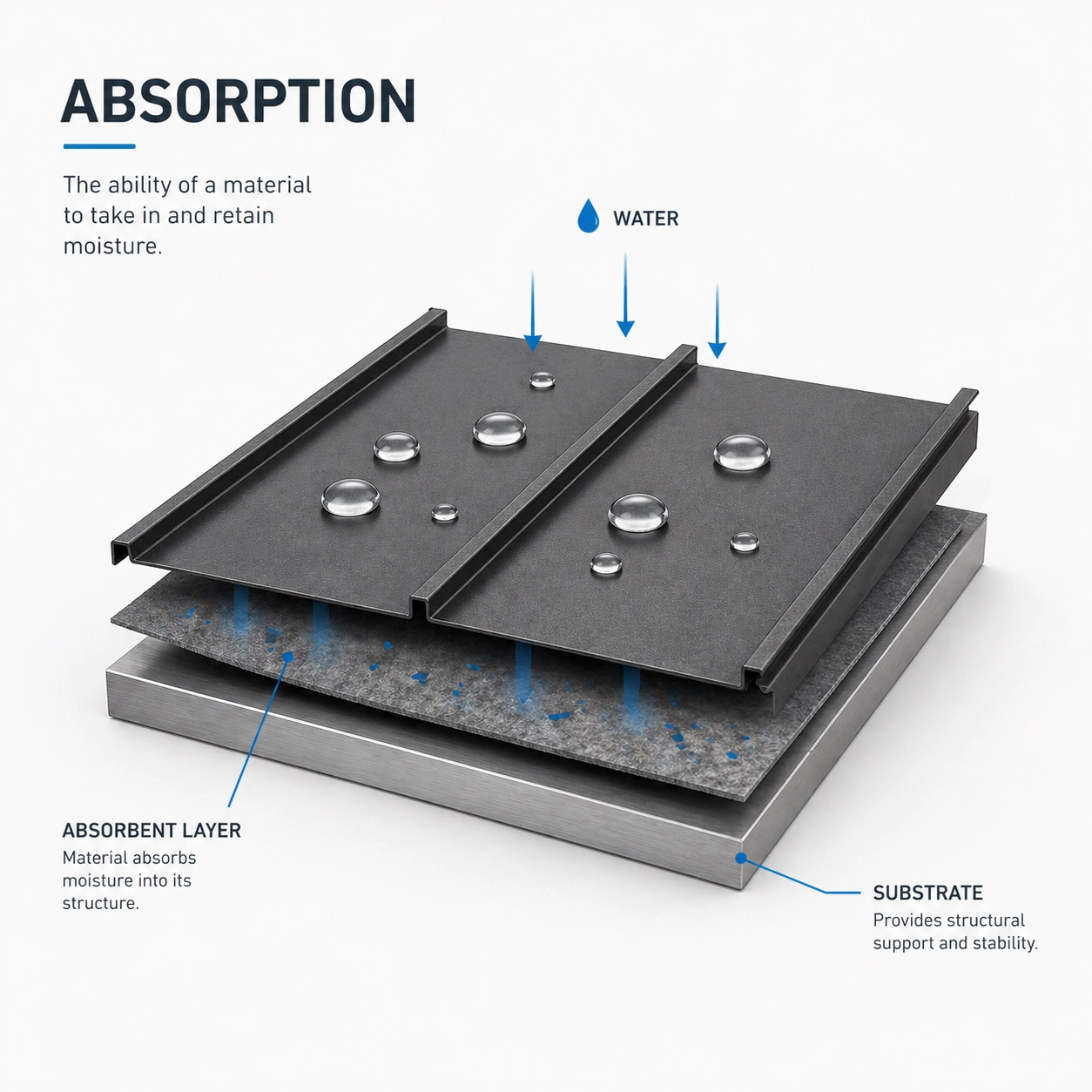
Absorption is the process by which roofing materials take in and retain water, vapor, or other liquids. High absorption can lead to increased moisture retention, which may cause material degradation, reduced thermal performance, and a higher risk of leaks or mold. Selecting low-absorption materials is critical for long-term roof durability, especially in climates with frequent rain or humidity.
How Roof Absorption Influences Energy Efficiency, Moisture Control, and Material Longevity
Absorption, in roofing terminology, refers to the process by which roofing materials take in and retain moisture, typically water, through their surface or internal structure. This property is critical in evaluating the performance of roofing components such as shingles, membranes, and underlayments, as excessive absorption can compromise the roof’s integrity and longevity. The degree of absorption depends on the material’s porosity, density, and composition, affecting how water interacts with the roof’s surface, including slopes, ridges, and eaves.
Functionally, absorption influences a roof’s ability to resist water infiltration, manage drainage, and withstand freeze-thaw cycles. Materials with high absorption rates may become saturated, leading to increased weight, reduced structural efficiency, and potential deterioration under repeated wetting and drying. In climates with significant precipitation or snow, controlling absorption is essential to prevent water-related damage, such as rot or mold, and to maintain effective water shedding along the roof pitch and slopes.
Absorption is a key consideration in selecting roofing materials for specific applications, especially in regions prone to heavy rainfall or snow accumulation. Low-absorption materials are preferred for optimal water resistance, improved wind uplift performance, and enhanced durability at critical points like ridges and eaves.
How Roof Absorption Is Measured in Roofing Materials
Roof absorption is measured by evaluating how much water or moisture a roofing material can take up when exposed to rain, humidity, or condensation. Laboratory testing typically follows standardized procedures, such as ASTM C209 or ASTM D570, where roofing samples are weighed before and after controlled water immersion to determine the percentage of water absorbed. This absorption rating for roofing systems is a critical performance property, as higher absorption can lead to increased risk of moisture problems, reduced insulation effectiveness, and accelerated material degradation, especially in humid climates.
Professionals also assess roof absorption through field performance, monitoring how materials behave under real-world weather exposure over time. The impact of roof absorption on energy efficiency is significant: materials with high absorption may retain moisture, reducing thermal resistance and potentially increasing cooling loads. In contrast, the benefits of low absorption roofing materials include improved durability, reduced risk of mold or rot, and better long-term energy performance. Roofing experts consider both absorption vs reflectance in roofing when specifying materials, as optimal performance often requires balancing moisture resistance with solar reflectance for the building’s climate and use.
Overview & Key Considerations
What Is Absorption
Why Absorption Matters
Benefits of Absorption
MOISTURE CONTROL
Understanding absorption rates helps evaluate a roofing material’s ability to resist water ingress and prevent moisture-related failures.
ENERGY EFFICIENCY
Low absorption properties reduce heat transfer, supporting thermal performance and lowering building cooling loads.
DURABILITY ASSESSMENT
Measuring absorption enables accurate prediction of long-term material degradation due to freeze-thaw cycles or water exposure.
PRODUCT COMPARISON
Absorption data allows objective comparison of roofing products for suitability in climates with high precipitation or humidity.
Limitations of Absorption
ENVIRONMENTAL DEPENDENCY
Absorption rates vary significantly with temperature, humidity, and material porosity, limiting consistent performance predictions across climates.
MEASUREMENT CHALLENGES
Accurately quantifying absorption in situ is difficult due to substrate variability and fluctuating environmental conditions.
INCOMPLETE PERFORMANCE INDICATOR
Absorption alone does not account for related properties like retention, desorption, or vapor permeability, limiting holistic moisture assessment.
TIME-DEPENDENT VARIABILITY
Absorption capacity and rate can change over a material’s lifespan due to aging, contamination, or surface degradation.
Common Absorption Problems
MOISTURE RETENTION FAILURE
Excessive absorption in roofing materials leads to persistent moisture retention, increasing the risk of mold growth and insulation degradation.
THERMAL PERFORMANCE LOSS
High absorption rates cause insulation materials to lose thermal resistance, resulting in elevated energy consumption and occupant discomfort.
FREEZE-THAW DAMAGE
Absorbed water in porous roofing components expands during freeze-thaw cycles, causing cracking, spalling, and premature material failure.
MISMEASURED ABSORPTION RATES
Incorrect assessment of absorption properties results in inappropriate material selection, leading to unexpected performance failures under real-world weather conditions.
Absorption Quick Facts
Use Cases for Absorption
ENERGY EFFICIENCY RATINGS
Absorption values are critical when evaluating roofing materials for compliance with energy codes that limit heat gain through the roof.
COOL ROOF SELECTION
Low absorption is prioritized in hot climates to reduce heat transfer into buildings and lower cooling energy demand.
MOISTURE DURABILITY TESTING
Absorption rates are measured to compare how different roofing materials resist water uptake and potential freeze-thaw damage.
PRODUCT SPECIFICATION
Architects reference absorption data to select materials that minimize water retention and related performance risks in specific climates.